Shop with a short gap list
Write down two or three actual wardrobe gaps before browsing: perhaps a warm work layer or a pair of everyday trousers. Include measurements from a piece you already like. This keeps the search open enough for secondhand surprises without turning every bargain into a project.
Inspect the points that fail first
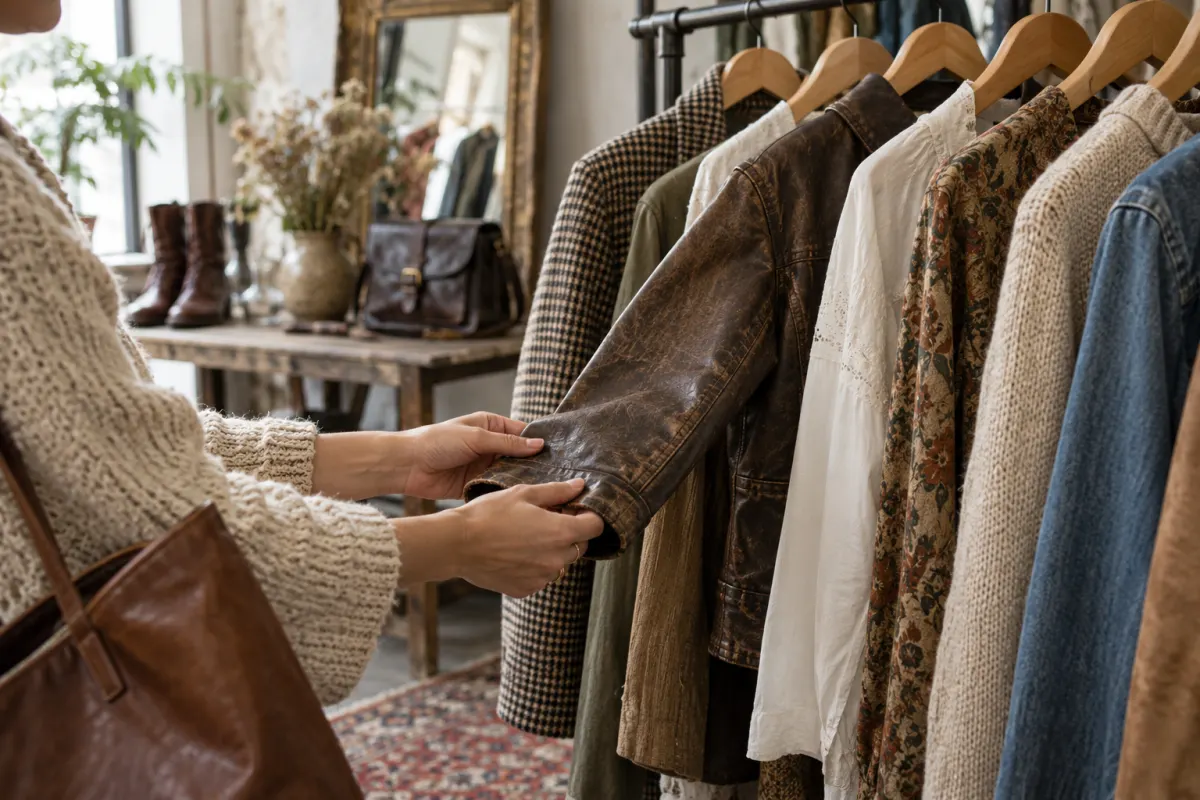
Check underarms, cuffs, inner thighs, pocket corners, hems, zips and buttons in good light. Look for odors and stains you cannot confidently remove. A small loose button is different from stretched fabric or extensive lining damage. Price the repair before deciding it is 'easy'.
Fit is a three-dimensional test
Try sitting, reaching and walking. Vintage sizes and brand labels vary too much to act as a reliable fit guide. If shopping online, compare flat garment measurements with an owned item and ask about return terms; body measurements alone may not reveal the intended ease.
Make three outfits before buying
Name three situations and combine the find with pieces you already own. If every version requires another purchase, pause. A useful secondhand wardrobe grows through repeated wear, not through the number of clever finds. Leaving a beautiful but impractical piece behind is a successful decision.