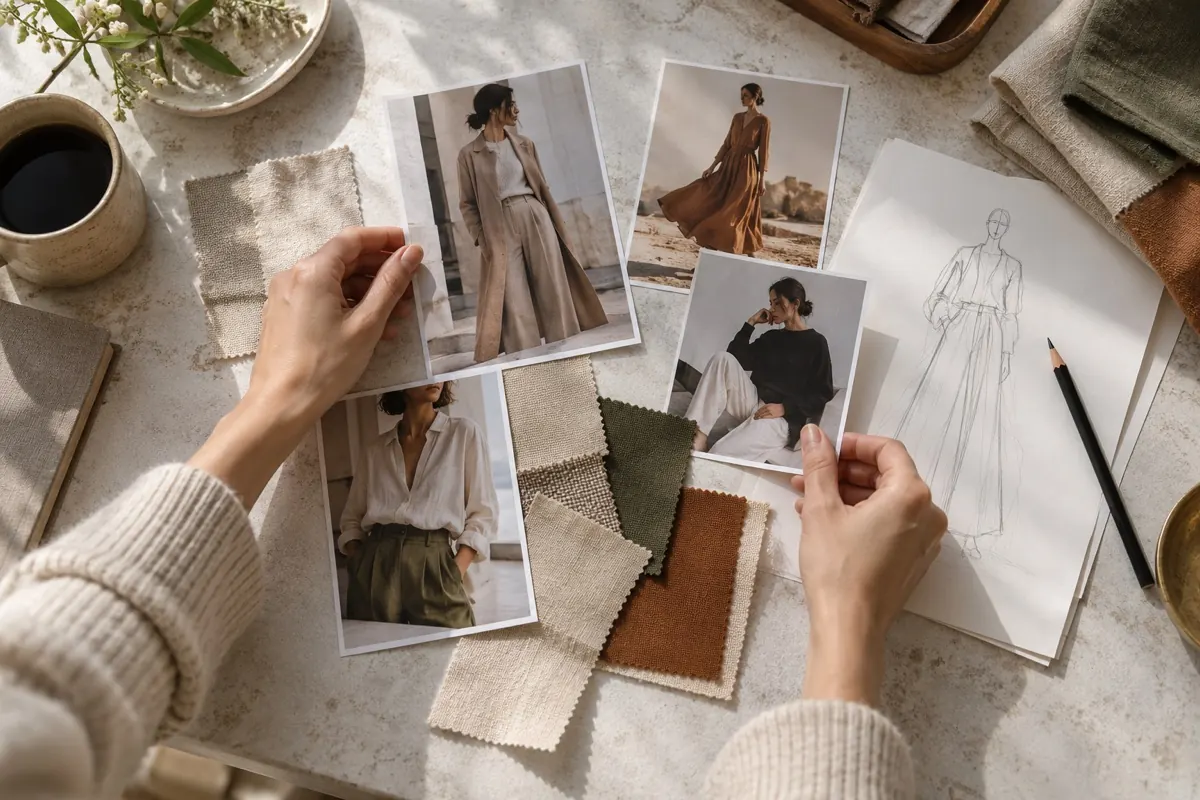
Collect evidence from real outfits
Choose five to ten outfits you genuinely enjoyed wearing and note what they share: proportion, color contrast, structure, fabric, shoe shape, or amount of layering. Include comfort and suitability, not only photographs or compliments.
Also look at the clothes you avoid. A beautiful item may remain unworn because the fabric, maintenance, exposure, or formality conflicts with your routine.
Name the repeated ingredients
Translate patterns into plain phrases such as relaxed top with defined waist, long clean lines, soft neutral layers, or simple base with one bold detail. These are more useful than a broad trend name.
Choose three words for how you want outfits to feel. Use them as a filter when combining clothes, not as rules that remove experimentation.
Experiment one variable at a time
Turn the repeated ingredients into two or three outfit formulas, then change one element: the shoe, color, layer, or proportion. Photograph the versions that work so the discovery is easy to repeat.
If you notice a genuine gap, define the role before buying. A precise need such as a light rain layer that works over wide trousers is easier to solve than a vague desire for a new style.