Start with use, not a new shopping category
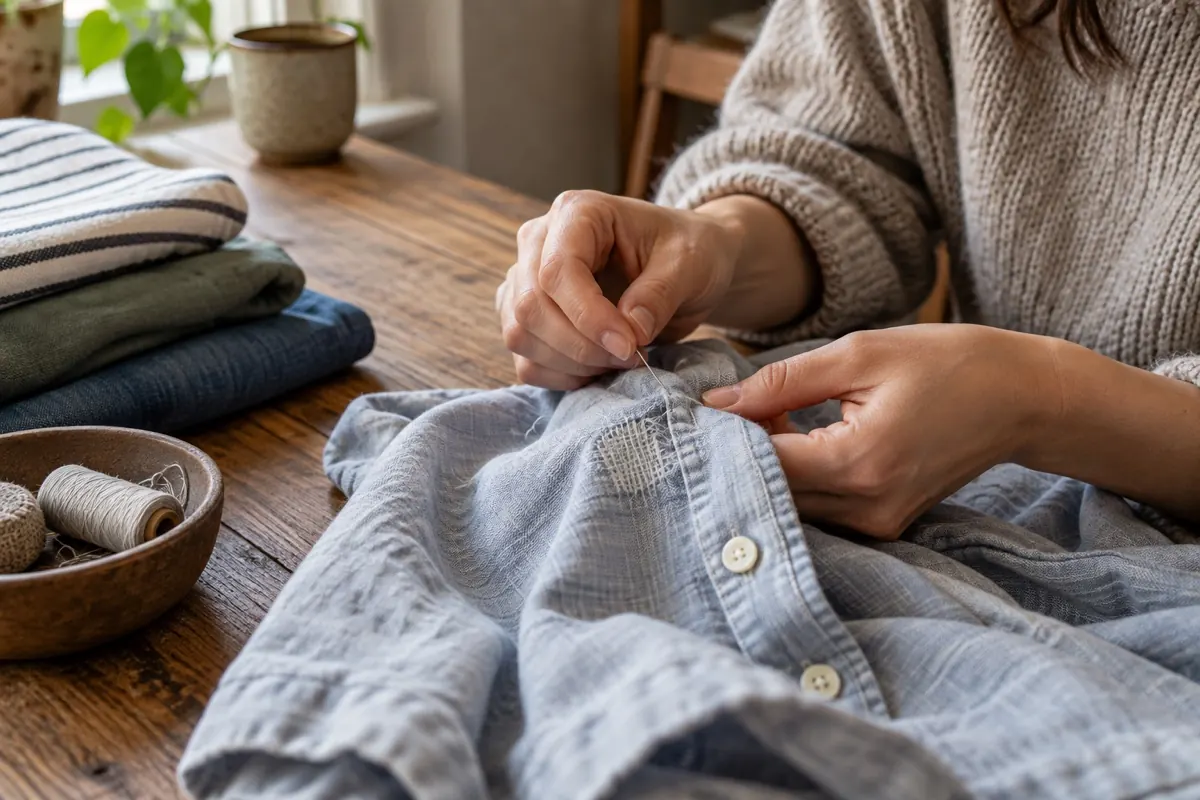
The lowest-friction place to begin is wearing, caring for, repairing, and restyling clothes already in your wardrobe. Extending use spreads the impact of production across more wears and reduces rushed replacement.
When you need something, define the role and expected frequency first. A durable piece that suits your life can be more useful than a theoretically better option that stays unworn.
Look beyond one material claim
Fiber choice matters, but so do farming or extraction, processing, dyeing, construction, worker conditions, transport, durability, and end-of-life options. Broad claims such as eco-friendly need evidence and context.
Look for specific disclosures, credible certification where relevant, care information, and construction you can inspect. Transparency does not solve every impact, but it makes comparison possible.
Use secondhand, repair, and resale thoughtfully
Secondhand can keep existing garments in circulation, while repair can make a favorite item useful again. Both work best when they support real needs instead of increasing the volume of rarely worn clothes.
Set a care routine that fits the fabric: wash only when needed, follow temperature guidance, air dry when appropriate, and address small damage early. Good maintenance is an everyday form of sustainable fashion.