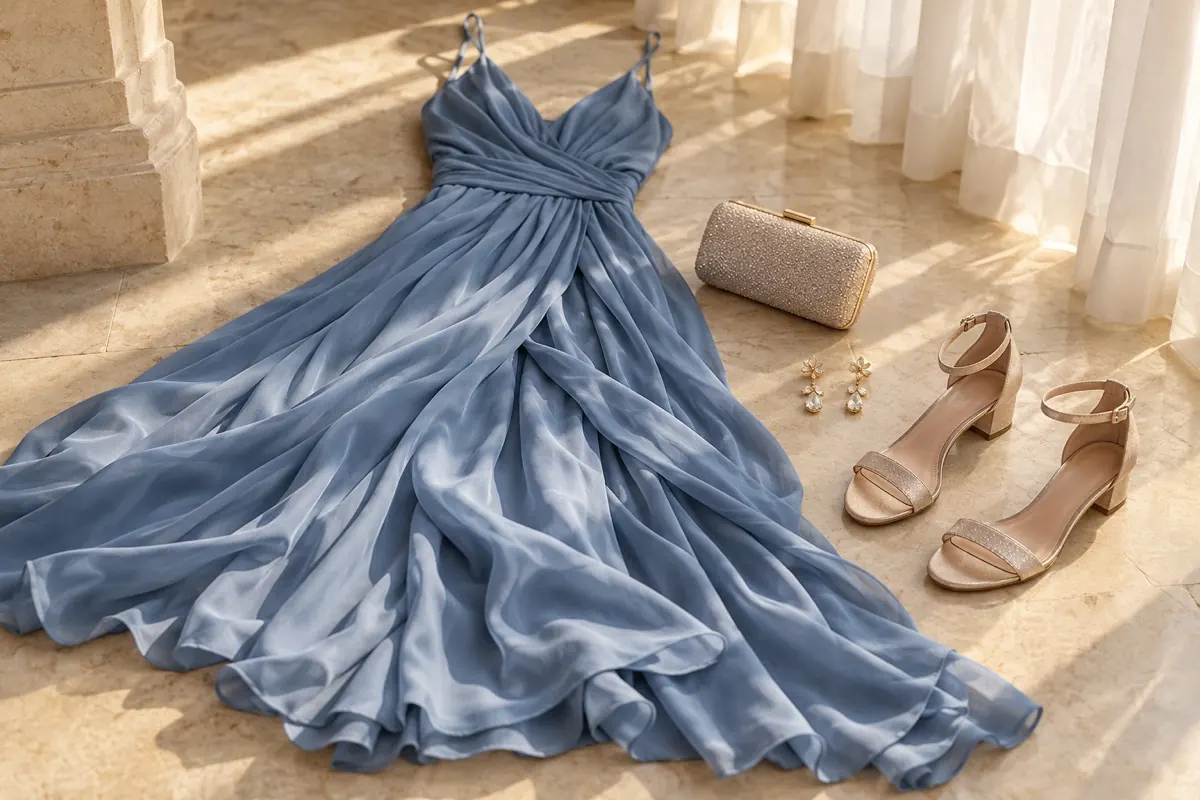
Read the dress code in context
Black tie usually calls for a floor-length gown, formal suit, or tuxedo-level dressing. Cocktail and semi-formal allow shorter hemlines and polished separates, while casual still means intentional clothing rather than everyday errands wear.
Check the venue, ceremony time, season, and any cultural guidance from the couple. A garden, city hotel, beach, and religious venue can all change the practical requirements.
Choose the foundation first
Start with the dress, suit, jumpsuit, or coordinated separates, then add shoes and a layer. Avoid white or near-white unless the invitation explicitly requests it, and do not rely on a color rule when the couple has given more specific guidance.
Sit, walk, and raise your arms in the full outfit before the event. A look that needs constant adjustment will feel less polished by the end of the day.
Plan for weather and duration
Outdoor ceremonies need shoes that can handle the ground, sun or rain protection, and a layer for evening. Destination weddings may reward wrinkle-tolerant fabric and accessories that work with more than one travel outfit.
Carry only what supports the day: a small bag, comfortable backup plan if appropriate, and one accessory that gives the outfit its direction. Restraint often looks more considered than adding every formal detail.